Baking powder
Baking powder is a mix of baking soda, a dry acid and starch that makes cakes and muffins rise. Here is how much to use and how to test if it is fresh.
Also called Double-acting baking powder, Bakpulver, Backpulver.
Baking powder is a chemical leavening. It is a mix of baking soda, one or two dry acids, and a little starch to keep it dry. When it gets wet, and again when it gets hot, the soda and acid react and give off carbon dioxide. The gas bubbles make cakes, muffins, pancakes and quick breads rise without yeast.
How to tell it is done
To check if your baking powder still works, stir ½ teaspoon into 60 ml (¼ cup) of hot water. It should fizz strongly right away. If it barely bubbles, replace it.
Why it works
Baking soda is a base. It needs an acid to release gas. Baking powder carries its own acid, so it works in batters made only with milk, water or eggs, which are not acidic. Because the reaction starts as soon as it gets wet, get the batter into the oven soon after mixing. Double-acting powder buys you a little time, since part of the rise waits for the heat.
How to use it
Baking powder has the same name in English everywhere. Other names you will see:
- Double-acting baking powder in the US. This is the usual kind there. It releases some gas when mixed and the rest in the oven.
- Bakpulver in Swedish recipes and Backpulver in German ones. They are used the same way.
A common amount is about 1 to 1½ teaspoons per 125 g (1 cup) of all-purpose flour. Recipes with buttermilk or yogurt often use less baking powder and add some baking soda.
Substitutes
- For 1 teaspoon baking powder, use ¼ teaspoon baking soda plus ½ teaspoon cream of tartar.
- Self-rising flour already has baking powder in it. Leave the baking powder out if you use it.
- In some Swedish cookies, hjorthornssalt (baker's ammonia) does a similar job and gives a very crisp result.
How to store it
Keep the lid tight and the tin in a dry cupboard. Moisture sets off the reaction slowly, so baking powder loses strength after about 6 to 12 months once opened.
Common mistakes
- Using baking soda when the recipe says baking powder. Soda is about three to four times as strong and tastes soapy without acid.
- Adding extra for a better rise. Too much makes cakes rise fast, then sink, and taste bitter.
- Letting the batter sit for an hour before baking.
In recipes
You will see "2 tsk bakpulver", "1 tsp baking powder" and "1 level teaspoon baking powder".
Recipes that use it
336 recipes from the sites we collect.

Vegan S'mores Pancakes
minimalistbaker.com · 20 min

Whole Grain Vegan Pancake Mix (6 Ingredients!)
minimalistbaker.com · 10 min
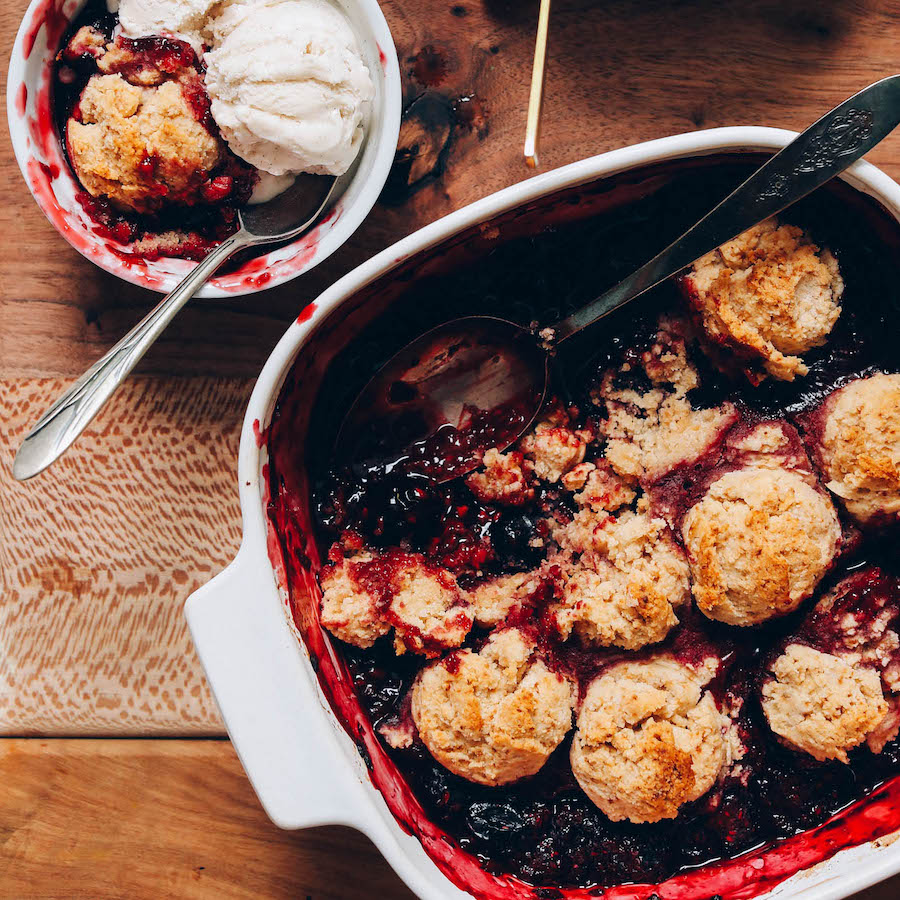
Easy Gluten-Free Berry Cobbler (Vegan)
minimalistbaker.com · 55 min

Gluten-Free Funfetti Cupcakes (1 Bowl!)
minimalistbaker.com · 35 min

Pumpkin Chocolate Chip Muffins
minimalistbaker.com · 35 min

Blueberry Orange Brunch Cake with Agave and Pistachios
pinchofyum.com · 65 min

Fluffy Vegan Scrambled Eggs
minimalistbaker.com · 375 min

Chocolate Chip Oatmeal Cookie Pancakes
minimalistbaker.com · 10 min

Smores Waffles with Nutella and Toasted Coconut
pinchofyum.com · 15 min

Oreo Cookie Pancakes
minimalistbaker.com · 15 min

French Toast Sugar Cookies
minimalistbaker.com · 25 min

No-Bake Cookie Pancakes
minimalistbaker.com · 30 min
Related terms
- Baking sodaBaking soda is sodium bicarbonate, a strong leavening that needs an acid to work. In the UK it is bicarbonate of soda, in Ireland bread soda.
- LeaveningLeavening is what makes dough and batter rise, such as yeast, baking soda, baking powder, steam or whipped air. Here is how each works and when to use it.
- Self-rising flourSelf-rising flour is all-purpose flour with baking powder and salt mixed in. The UK self-raising kind has no salt. Here is how to make your own.
- HjorthornssaltHjorthornssalt is baker's ammonia, a leavening that makes Swedish cookies very crisp and light. How to use it, and what to use instead abroad.
- TeaspoonA teaspoon holds 5 ml, and 3 teaspoons make a tablespoon. Here is how to measure one level, and how it compares to tsk and krm in Swedish recipes.
- All-purpose flourAll-purpose flour is a medium-protein white wheat flour for cakes, cookies, sauces and bread. In the UK it is plain flour, in Sweden vetemjöl.