Cube
To cube is to cut food into even blocks, usually 1.5 to 2.5 cm on each side, bigger than a dice. It is the usual cut for stew meat, kebabs and croutons.
Also called Cubed, Cubes.
To cube means to cut food into even, square blocks. Cubes are usually larger than a dice, often 1.5 to 2.5 cm (about 1/2 to 1 inch) on each side. Recipes cube stew meat, potatoes, squash, bread, cheese, tofu and cold butter.
How to do it
- Trim off anything you do not want, such as skin, gristle or a hard rind.
- Cut the food into slabs as thick as the cube size you want.
- Cut each slab into strips of the same width.
- Line the strips up and cut across them at the same width again.
- For meat, cut across the grain where you can, and keep the pieces the same size so they cook at the same rate.
Why it works
Even cubes cook in the same time, which matters most in long-cooked dishes such as a stew and in quick ones such as kebabs, where small pieces dry out while large ones are still raw. Larger cubes also hold their shape through long cooking better than small pieces.
How to use it
- Meat for stews and braises: about 2.5 to 4 cm (1 to 1 1/2 inches), so it stays juicy over hours of cooking.
- Meat and vegetables for skewers: about 2.5 cm (1 inch).
- Potatoes and root vegetables for roasting: 2 to 3 cm (3/4 to 1 1/4 inches).
- Bread for croutons: about 2 cm (3/4 inch).
- Cold butter for pastry: about 1 cm (1/2 inch), so it is easy to rub in.
Common mistakes
- Buying pre-cut "stew meat" without checking it. It is often a mix of cuts and sizes that cook unevenly. Cutting your own is more reliable.
- Cutting soft food such as cheese or tofu with a dull knife, which squashes it. Chill it first and use a sharp chef's knife.
- Making cubes much smaller than asked. They overcook and fall apart.
- Crowding cubed meat in the pan when you brown it. It steams instead of browning. Work in batches.
In recipes
"Cubed", "cut into cubes" and "cut into chunks" all point to this cut. If a recipe gives a size, follow it. If it does not, aim for bite-sized pieces of about 2 cm (3/4 inch). Smaller, more exact pieces are called diced.
Recipes that use this technique
5 recipes from the sites we collect.

Ahi Poke Bowl with Mango
www.skinnytaste.com · 15 min
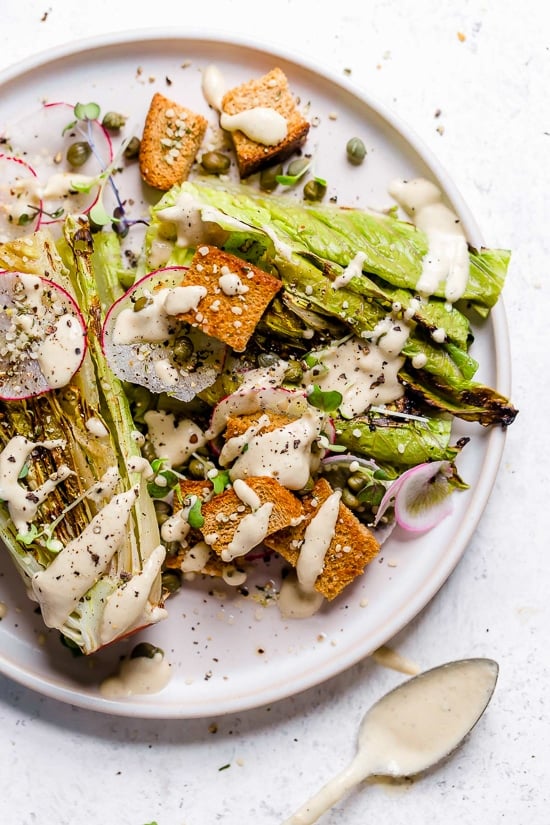
Vegan Caesar Salad With Creamy Dressing
www.skinnytaste.com · 30 min

Dynamite Plant Power Sushi Bowls
pinchofyum.com · 25 min
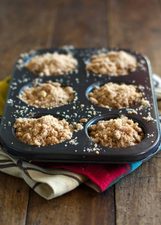
Whole Wheat Chocolate Chip Banana Peanut Butter Muffins
pinchofyum.com · 25 min
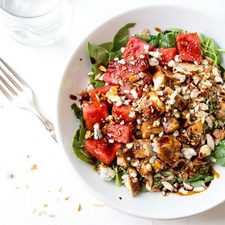
Balsamic Watermelon Chicken Salad
pinchofyum.com · 40 min
Related terms
- DiceTo dice is to cut food into small, even cubes. Large, medium and small dice have set sizes, so everything in the pan cooks at the same rate.
- ChopTo chop is to cut food into small pieces of roughly the same size, without the exact shape of a dice. Recipes say roughly, coarsely or finely chopped.
- StewA stew is small pieces of meat or vegetables simmered slowly in enough liquid to cover them, until tender. The liquid becomes the sauce.
- KebabA kebab is grilled or roasted meat, fish or vegetables, often on a skewer, from the Middle East, Turkey and South Asia. See how to grill them evenly.
- Chef's knifeA chef's knife is the all-purpose kitchen knife, with a wide 20 cm (8 in) blade for chopping, slicing and mincing. Here is how to hold it.