Frittata
A frittata is an Italian open egg dish set gently on the stove and finished under the broiler or in the oven. See the ratio and how to keep it tender.
Also called Frittate, Italian omelet.
A frittata is an Italian egg dish. Beaten eggs are mixed with fillings such as vegetables, cheese, cooked potatoes or cured meat, then cooked slowly in a pan until set. Unlike an omelet, it is not folded. It is served flat, in wedges, hot or at room temperature.
How to do it
- Heat the oven to 180°C (350°F) or turn on the broiler (grill in the UK).
- Cook any raw fillings first in an oven-safe skillet, about 25 cm (10 inches) across. Fillings should be cooked and fairly dry.
- Beat 8 eggs with a pinch of salt and 2 to 3 tablespoons of milk, cream or grated cheese.
- Pour the eggs over the fillings in the pan over medium-low heat. Stir gently for the first minute, then leave it.
- Cook until the edges are set and the middle is still a little wet, 6 to 10 minutes.
- Move the pan to the oven for 8 to 12 minutes, or under the broiler for 2 to 3 minutes, until the top is just set.
- Rest for 5 minutes, then slide it out and cut into wedges.
How to tell it is done
The center no longer looks wet and springs back when pressed, much like the spring-back test for cake. A knife in the middle comes out clean. The edges are lightly golden, not brown and rubbery. Egg dishes should reach 71°C (160°F) in the center.
Common mistakes
- High heat. The eggs turn tough and weep liquid.
- Raw, wet vegetables. They release water and the frittata goes soggy.
- A sticky pan. Use a well-seasoned or nonstick pan and enough oil.
- Leaving it under the broiler. It goes from set to rubbery in under a minute.
In recipes
A frittata is close to a Spanish tortilla, which is mostly potato and onion and is flipped instead of finished in the oven. A quiche has a pastry crust and more cream, so it is softer. Frittata keeps in the fridge for 3 to 4 days and is good cold.
Frittata recipes
12 recipes from the sites we collect.
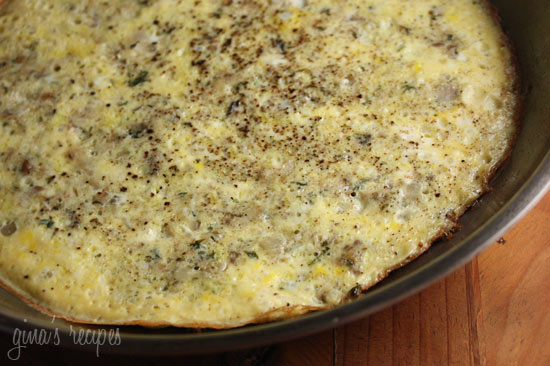
Mushroom Shallot Frittata
www.skinnytaste.com · 30 min

Tomato and Zucchini Frittata
www.skinnytaste.com · 30 min
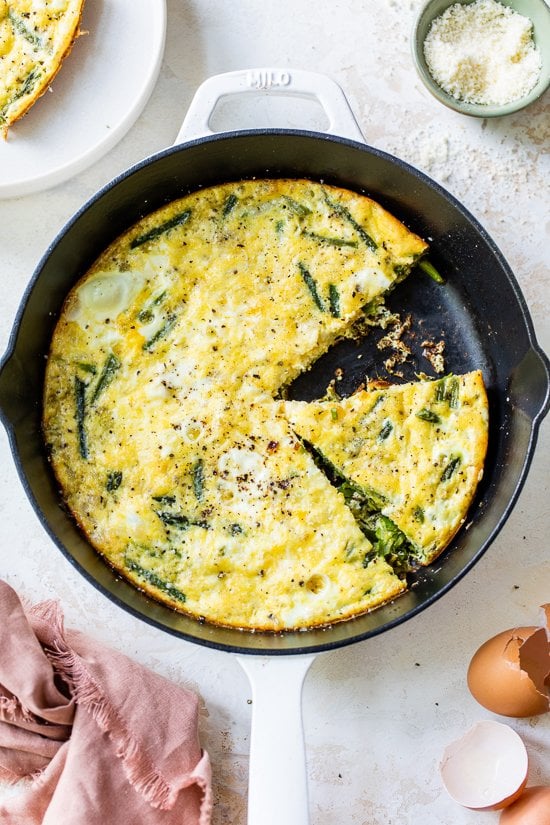
Asparagus and Swiss Cheese Frittata
www.skinnytaste.com · 40 min

Caramelized Onion, Red Pepper and Zucchini Frittata
www.skinnytaste.com · 40 min

Swiss Chard Frittata
www.skinnytaste.com · 40 min

Leftover Turkey and Sweet Potato Frittata
www.skinnytaste.com · 55 min

Cacio e Pepe Frittata with Lemony Yogurt and Arugula Salad
www.skinnytaste.com · 60 min

Spinach Frittata
www.onceuponachef.com · 35 min

Zucchini & Cheddar Frittata
www.onceuponachef.com · 35 min
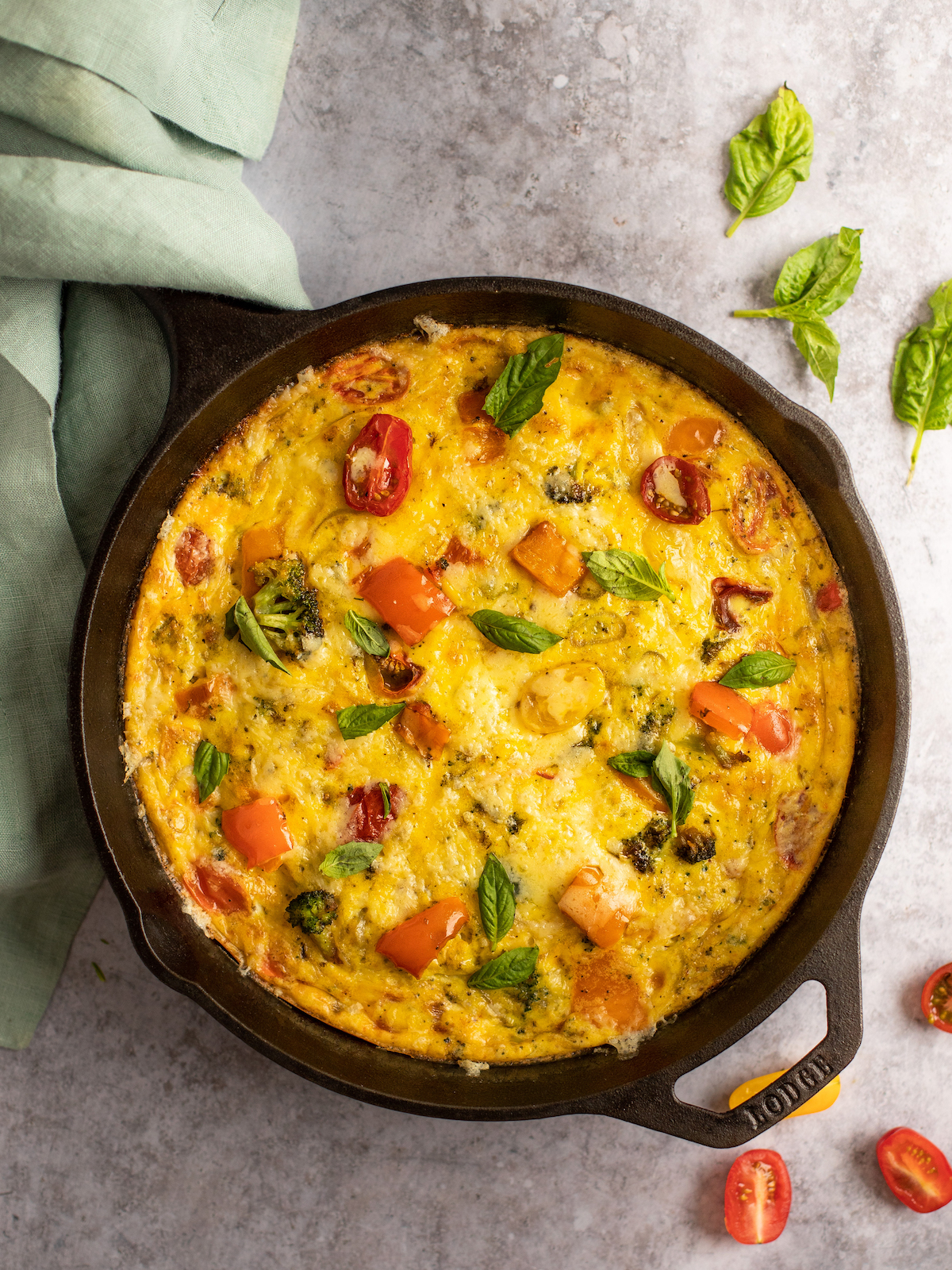
Best Basic Frittata Recipe
www.onceuponachef.com · 35 min

Cottage Cheese Egg Bake (Frittata)
www.skinnytaste.com · 30 min

Fluffy Vegan Scrambled Eggs
minimalistbaker.com · 375 min
Related terms
- QuicheQuiche is a savory tart of eggs and cream baked in a pastry crust with bacon, cheese or vegetables. See the ratio and how to avoid a soggy base.
- SetIn recipes, set means a liquid has firmed into a solid that holds its shape, as with custard, jam, jelly, eggs and chocolate. Here is how to check it.
- BroilBroiling cooks food with strong, direct heat from the top element of the oven. It browns cheese, chars peppers and cooks thin cuts in a few minutes.
- SkilletA skillet is a frying pan with low, sloped sides for searing, frying and sautéing. Here are the materials, sizes and how to choose the right one.
- Spring-back testThe spring-back test checks if a sponge or cake is baked by pressing the top lightly. If it springs back and leaves no dent, the cake is done.