Gelatin
Gelatin is a setting agent made from animal collagen, sold as sheets or powder. How to bloom it, dissolve it and get a smooth set every time.
Also called Gelatine, Gelatin sheets, Leaf gelatin, Gelatinblad.
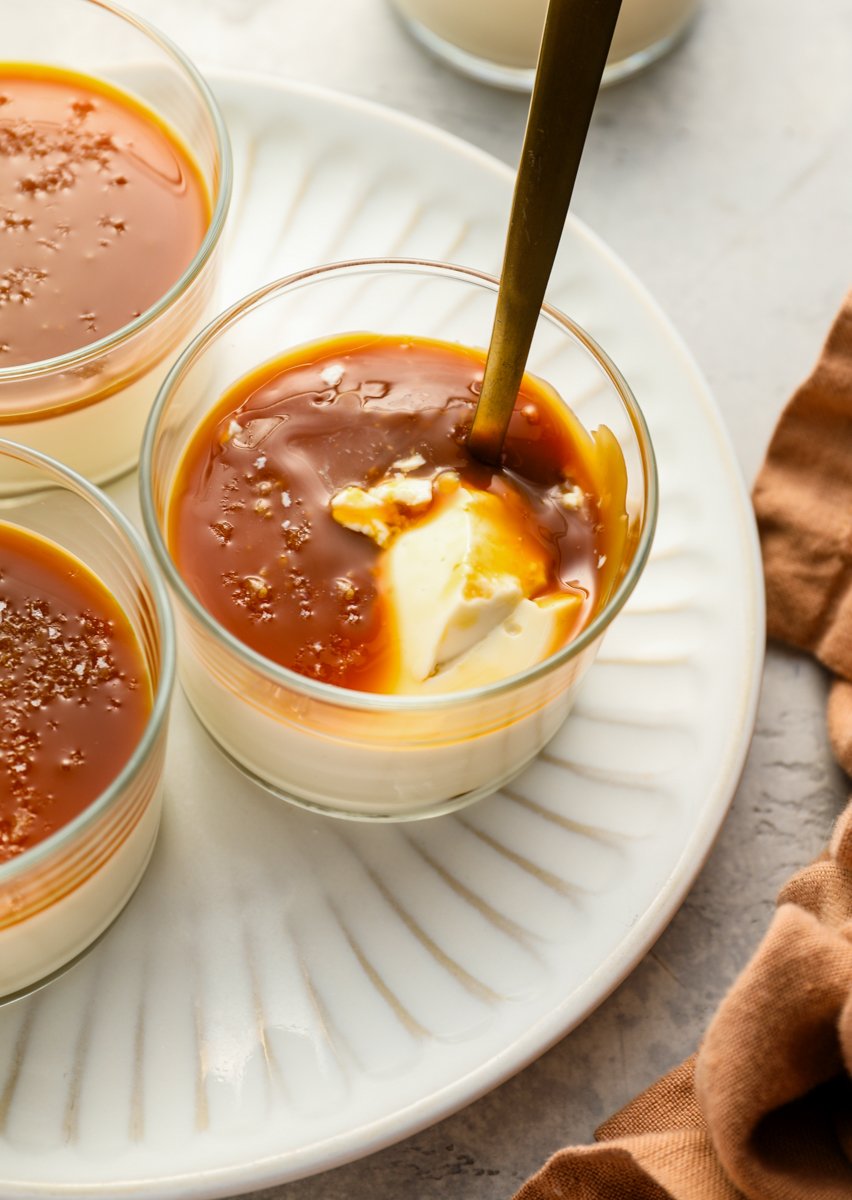
Gelatin is a protein made from collagen, usually from pig skin or cattle bones and hides. Dissolved in warm liquid and then chilled, it sets into a soft, wobbly gel. It sets panna cotta, mousses, cold soufflés, jellies, marshmallows and cheesecakes. It melts at about body temperature, so it melts in the mouth.
How to do it
- Bloom it. Soak sheets in plenty of cold water for 5 to 10 minutes until floppy, then lift them out and squeeze. Sprinkle powder over a small amount of cold water, about 3 tablespoons per 7 g packet, and leave for 5 minutes until it looks spongy.
- Dissolve it. Stir the bloomed gelatin into warm liquid, off the heat, until no strands or grains are left. The liquid should be hot to the touch but not boiling.
- Set it. Pour into molds and chill for at least 4 hours, or overnight for large molds.
One 7 g packet of powdered gelatin (about 2¼ teaspoons) sets around 500 ml (2 cups) of liquid. Sheets come in different strengths, so follow the pack.
Substitutes
Agar is the plant-based swap. It sets firmer, sets at room temperature and must be boiled. Use much less agar than gelatin and test on a cold plate.
Common mistakes
- Boiling it. High heat weakens gelatin, so the set is soft or never comes.
- Adding powder straight to hot liquid. It clumps into rubbery lumps.
- Using raw pineapple, kiwi, papaya, mango, figs or fresh ginger. Their enzymes break down the protein and stop the set. Cook the fruit first or use canned.
- Pouring warm gelatin into a very cold mixture, such as whipped cream. It sets into strings. Mix a spoonful of the cold mixture into the gelatin first, then fold it back in.
In recipes
European recipes usually give gelatin in sheets (leaves), American ones in packets or teaspoons of powder. Gelatin is made from animals, so it is not vegetarian or vegan, and pork gelatin is not halal or kosher. Fish and beef gelatin exist for those diets.
Recipes that use it
4 recipes from the sites we collect.


Related terms
- AgarAgar is a plant-based gelling agent made from red seaweed. It sets jellies firmly at room temperature and works where gelatin cannot.
- BloomTo bloom is to wake up an ingredient in liquid or fat before use, like soaking gelatin, proving yeast or frying spices. Here is how each one works.
- CollagenCollagen is the tough protein in meat's connective tissue. Slow, moist cooking turns it into gelatin, which makes braised meat tender and stock set.
- Crème pâtissièreCrème pâtissière is a thick custard of milk, egg yolks, sugar and starch, used to fill eclairs, tarts and doughnuts. Here is how to make it smooth.
- SouffléA soufflé is a baked dish that rises high in the oven from whipped egg whites folded into a flavored base. See how to make it rise and when to serve it.