Reduce
To reduce is to simmer or boil a liquid uncovered so water evaporates, leaving a smaller amount that is thicker and more intense in flavor.
Also called Reduction, Reduced, Reduce by half.
To reduce is to cook a liquid uncovered so some of its water evaporates. The liquid gets smaller in volume, thicker, and stronger in flavor. Cooks reduce stock, wine, cream, juices and sauces. A sauce made this way is often called a reduction, and it is the core of a pan sauce and of demi-glace.
How to do it
- Use a wide pan. A larger surface lets water evaporate faster.
- Bring the liquid to a steady simmer or a gentle boil, uncovered.
- Stir now and then, and scrape down the sides so nothing burns there.
- Skim off foam or fat that rises.
- Check the amount. To judge "reduce by half", note the level on the pan before you start, or dip a wooden spoon at the start and mark it.
- Season only at the end. Salt gets stronger as the water leaves.
How to tell it is done
The liquid has dropped to the amount the recipe asks for. A sauce reduced enough will coat the back of a spoon: run a finger through the film and the line stays clear. This look is called nappe. Bubbles get larger and slower as a sauce thickens.
Why it works
Heat turns water into steam, while sugars, salts, gelatin and flavor compounds stay behind. The same flavor ends up in less liquid. Gelatin from good stock and sugars from wine or juice make the liquid thicker as they concentrate.
Common mistakes
- Salting first. A well-salted stock reduced to a quarter will be far too salty.
- Covering the pan. Steam cannot escape and nothing reduces.
- Too much heat at the end. As sauces thicken they catch and burn quickly.
- Reducing milk or cream on high heat. It boils over or scorches. Keep it gentle.
- Reducing poor stock. Store-bought stock without gelatin will get salty before it gets thick.
In recipes
"Reduce by half" means until half the starting volume is left. "Reduce until syrupy" means until it coats a spoon and bubbles slowly. "Reduce to a glaze" means almost all the water is gone and the liquid is sticky. You often deglaze a pan with wine and then reduce it.
Recipes that use this technique
78 recipes from the sites we collect.

Flounder Piccata Recipe
www.skinnytaste.com · 20 min

Bolognese Sauce
www.skinnytaste.com · 115 min

Turkey Stuffed Zucchini
www.skinnytaste.com · 60 min

Poached Pears with Yogurt
www.skinnytaste.com · 35 min

Chicken Marbella Recipe
www.skinnytaste.com · 58 min
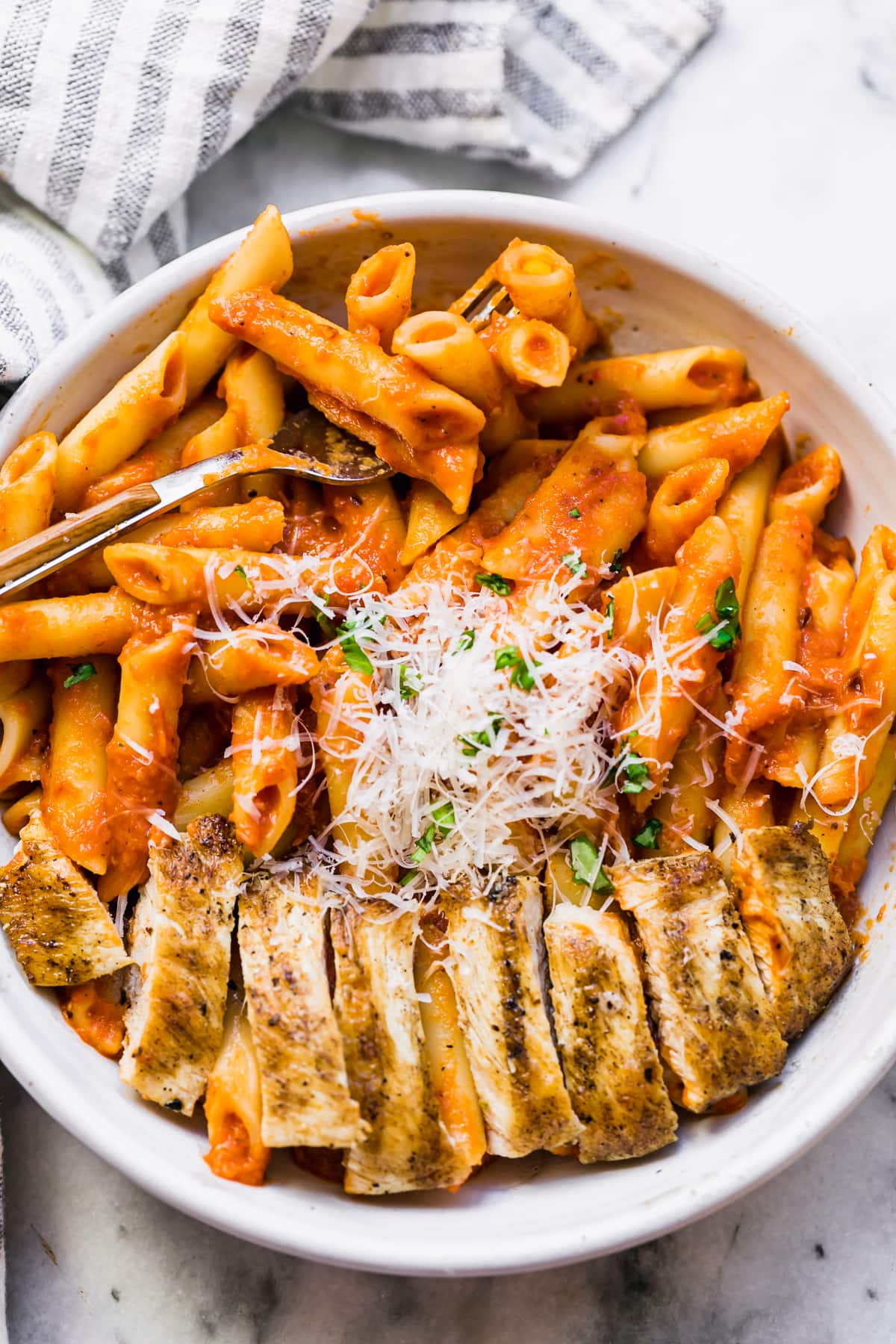
Penne alla Vodka with Chicken
www.skinnytaste.com · 60 min

Green Shakshuka
www.skinnytaste.com · 45 min

Spaghetti Carbonara Recipe
www.skinnytaste.com · 30 min

Spicy Shrimp Francese Recipe with Calabrian Chili
www.skinnytaste.com · 40 min

Chicken Piccata Recipe
www.skinnytaste.com · 20 min

Instant Pot Bolognese
www.skinnytaste.com · 60 min

Chicken Thighs with Shallots in Red Wine Vinegar (Poulet Au Vinaigre)
www.skinnytaste.com · 40 min
Related terms
- SimmerA simmer is liquid kept just below boiling, with small, gentle bubbles rising to the surface. It cooks soups, stews and sauces without toughening them.
- Coat the back of a spoonA sauce that coats the back of a spoon is thick enough to cling in an even layer and hold a line drawn through it. It is the classic test for custard.
- Pan sauceA pan sauce is made in the pan you seared meat in. Deglaze the browned bits, reduce, and finish with butter. It takes about five minutes.
- NappeNappe is the thickness at which a sauce coats the back of a spoon and holds a clean line when you draw a finger through it. It is the test for custards.
- Demi-glaceDemi-glace is a dark, glossy sauce base made by reducing brown stock, often with espagnole, until it is rich and syrupy. It anchors classic steak sauces.
- DeglazeTo deglaze is to pour liquid into a hot pan and scrape up the browned bits stuck to the bottom. Those bits become the flavor base of a quick pan sauce.