Sear
Searing browns the surface of meat or fish in a very hot pan to build a deep, flavorful crust. It adds flavor but does not seal in juices.
Also called Searing, Seared, Brown.
To sear is to brown the surface of food, usually meat, poultry, fish or scallops, in a very hot pan, on a grill or under a broiler. The aim is a dark brown, flavorful crust. Searing is often the first step before braising or roasting, or the last step in a reverse sear. The inside may or may not cook through during the sear itself.
How to do it
- Take the meat out of the fridge 20 to 30 minutes ahead, pat it dry and salt it.
- Heat a heavy pan, such as cast iron or stainless steel, over high heat for 2 to 3 minutes.
- Add a thin layer of oil with a high smoke point. It should shimmer and just begin to smoke.
- Lay the meat in, away from you. It should sizzle loudly at once.
- Leave it alone. It will stick at first, then release when the crust has formed, usually 2 to 4 minutes.
- Turn and sear the other sides, including fat edges.
How to tell it is done
The surface is a deep, even brown and lifts from the pan without tearing. It smells roasted and nutty, not burnt. The pan has browned bits, called fond, which you can turn into a sauce.
Why it works
At high surface temperatures, proteins and sugars react in the Maillard reaction, which creates hundreds of new flavor and aroma compounds and the brown color. This only happens once surface water has gone, which is why a dry surface and a hot pan matter.
Common mistakes
- Thinking it seals in juices. It does not. A seared steak loses about as much moisture as an unseared one. You sear for flavor.
- A wet surface. The pan's heat goes into boiling off water, so the meat turns gray.
- Crowding. Each piece cools the pan. Sear in batches.
- Nonstick pans. Most are not meant for very high heat and give a weaker crust.
- Pulling the meat to check it too early. Wait for it to release.
In recipes
"Sear on all sides" is common before a braise or stew. "Sear until a crust forms" means until it is deep brown, not just colored. "Brown the meat" means the same thing.
Recipes that use this technique
57 recipes from the sites we collect.
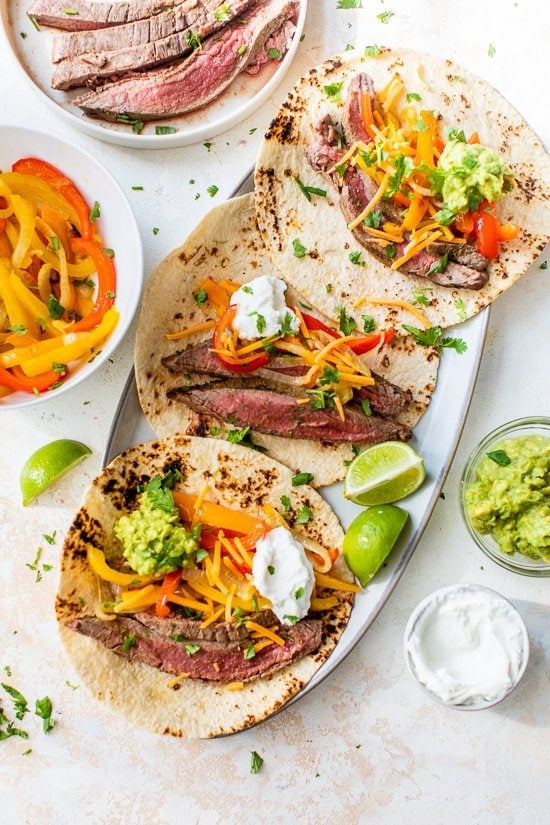
Grilled Steak Fajitas
www.skinnytaste.com · 40 min

Goulash
www.onceuponachef.com · 240 min

Korean BBQ Yum Yum Rice Bowls
pinchofyum.com · 30 min

Beer-Braised Bratwurst & Onions
www.onceuponachef.com · 35 min

Sea Scallops, Arugula, and Beet Salad
www.skinnytaste.com · 65 min

Skirt Steak, Baby Bok Choy and Zucchini Stir-Fry
www.skinnytaste.com · 25 min

Sesame Beef and Broccoli
pinchofyum.com · 30 min

Instant Pot Pot Roast
pinchofyum.com · 75 min

Beef Tzimmes
www.onceuponachef.com · 225 min

5 Ingredient Spicy Pork
pinchofyum.com · 35 min

Stuffed Chicken Breast with Prosciutto, Pears and Brie
www.skinnytaste.com · 45 min

Loaded Philly Cheesesteak Baked Potato
www.skinnytaste.com · 20 min
Related terms
- Maillard reactionThe Maillard reaction is the browning of protein and sugar under heat. It gives seared steak, bread crust, roasted coffee and fried onions their flavor.
- Reverse searThe reverse sear cooks a thick steak slowly in a low oven first, then sears it hot at the end, for even pink meat from edge to edge and a dark crust.
- Pat dryTo pat dry is to blot the surface of meat, fish or vegetables with paper towels before cooking. A dry surface browns well and does not spit in hot oil.
- FondFond is the layer of browned, stuck-on bits left in a pan after searing or roasting. Dissolved with liquid, it gives pan sauces and gravy their flavor.
- Smoke pointThe smoke point is the temperature at which an oil or fat starts to smoke and break down. It tells you which fats suit searing and frying.
- Cast ironCast iron is heavy iron cookware that holds heat for hard searing and turns nonstick when seasoned. Here is how to cook in it and clean it.