Skillet
A skillet is a frying pan with low, sloped sides for searing, frying and sautéing. Here are the materials, sizes and how to choose the right one.
Also called Frying pan, Fry pan.
A skillet is a frying pan: a round, flat pan with low sides that slope outward and one long handle. The low, sloped sides let steam escape, so food browns instead of stewing, and they make it easy to flip food and slide it onto a plate. In the UK it is called a frying pan. In the US, "skillet" and "frying pan" mean the same thing.
How to use it
- Heat the pan for a minute or two before adding fat, and let the fat get hot before the food goes in.
- Leave space between pieces of food so moisture can escape.
- Let food sit until it browns and releases on its own before you turn it.
Materials:
- Cast iron. Heavy, holds heat well, great for searing and oven work. Needs seasoning.
- Carbon steel. Like cast iron but lighter and faster to heat. Needs seasoning.
- Stainless steel. Browns food well and builds a good fond for pan sauces. Food sticks unless the pan and fat are hot.
- Nonstick. Best for eggs and fish at low to medium heat. Not for high-heat searing.
Sizes are measured across the top rim. A 25 cm (10 in) pan cooks for two, and a 30 cm (12 in) pan cooks for four. Most cooks own one of each.
Common mistakes
- Using a pan that is too small. Food crowds, releases water and steams.
- Adding food to a cold pan. It sticks and does not brown.
- Moving food around too soon. Meat and fish stick until a crust forms, then let go.
- Using a nonstick skillet at high heat for searing.
- Putting a hot pan under cold water. It can warp.
- Grabbing a handle that has been in the oven. Leave an oven mitt or a dry towel over it as a reminder.
In recipes
"Large skillet" usually means 30 cm (12 in), and "medium" means about 25 cm (10 in). "Ovenproof skillet" means one with a metal handle, often cast iron. A recipe that needs liquid to simmer with a lid may do better in a sauté pan, which has taller straight sides.
Recipes made with it
667 recipes from the sites we collect.

Kenyan Braised Collard Greens and Ground Beef
www.skinnytaste.com · 30 min

Slow Cooker Beef Meatballs with Broccoli Rabe
www.skinnytaste.com · 185 min

Chunky Beef, Cabbage and Tomato Soup (Instant Pot or Stove Top)
www.skinnytaste.com · 40 min

Cauliflower Rice Arancini
www.skinnytaste.com · 30 min

Spanish Paella
www.onceuponachef.com · 105 min

Thai Shrimp Curry
www.onceuponachef.com · 25 min
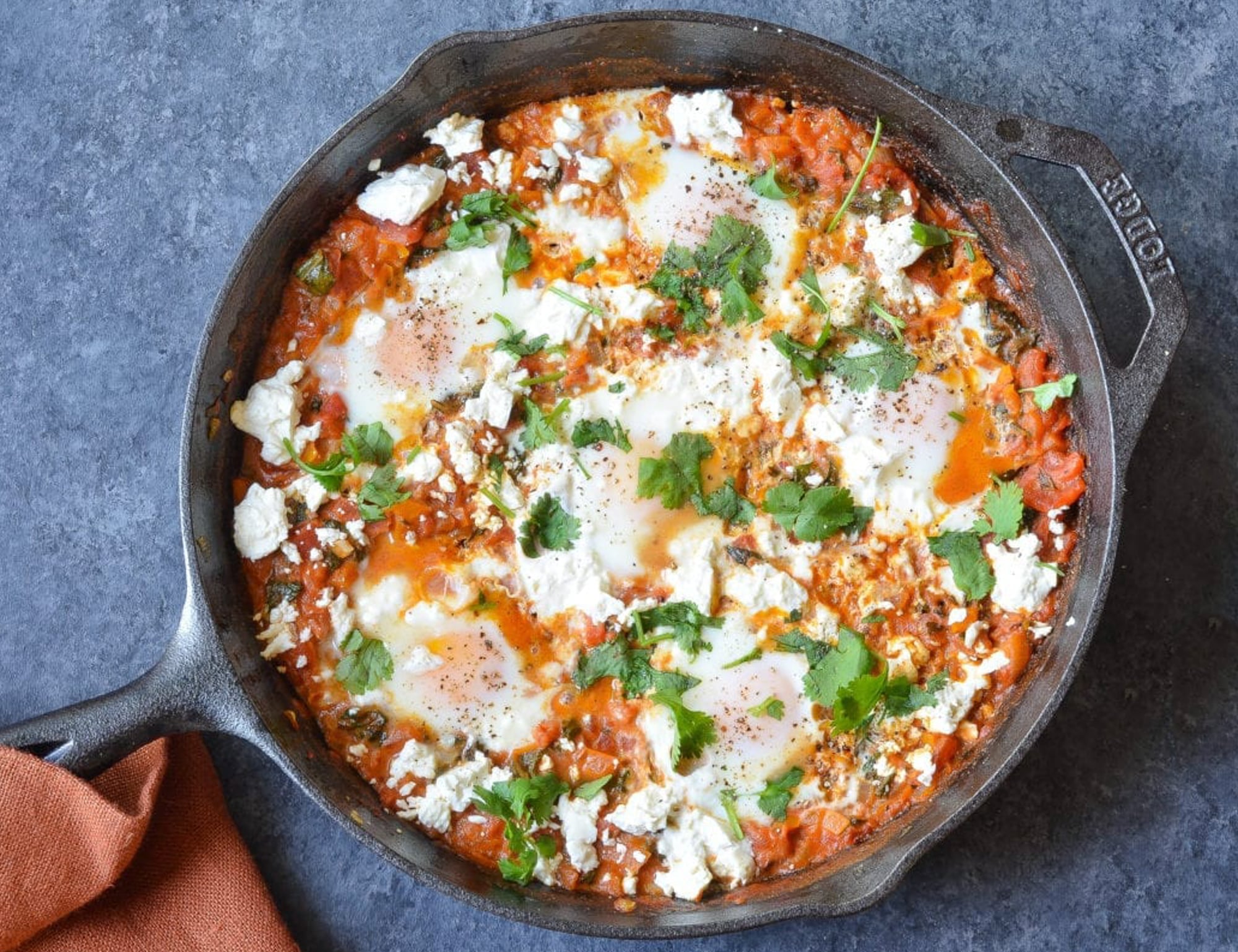
Shakshuka (Poached Eggs in Spicy Tomato Sauce)
www.onceuponachef.com · 50 min

Kid-Friendly Crock Pot Turkey Chili
www.skinnytaste.com · 255 min

Turkey and Black Bean Enchiladas
www.skinnytaste.com

Turkey Taco Spaghetti Squash Boats
www.skinnytaste.com · 60 min

Leftover Turkey and Sweet Potato Frittata
www.skinnytaste.com · 55 min

Turkey Santa Fe Zucchini Boats
www.skinnytaste.com · 80 min
Related terms
- Cast ironCast iron is heavy iron cookware that holds heat for hard searing and turns nonstick when seasoned. Here is how to cook in it and clean it.
- Nonstick panA nonstick pan has a slick coating that stops eggs, fish and pancakes from sticking with little fat. Here is how to use it and make the coating last.
- Carbon steel panA carbon steel pan is a light, fast-heating iron pan that turns nearly nonstick once seasoned. Here is how to season it and keep it rust-free.
- Sauté panA sauté pan is a wide pan with tall, straight sides and a lid, for searing then simmering and for pan sauces. Here is how it differs from a skillet.
- SearSearing browns the surface of meat or fish in a very hot pan to build a deep, flavorful crust. It adds flavor but does not seal in juices.
- SautéTo sauté is to cook small pieces of food quickly in a little hot fat over fairly high heat, tossing or stirring so they brown lightly and cook evenly.