Bread flour
Bread flour is a high-protein white wheat flour that gives chewy, well-risen loaves. In the UK it is strong flour, in Sweden vetemjöl special.
Also called Strong flour, Strong white bread flour, Vetemjöl special, Manitoba flour.
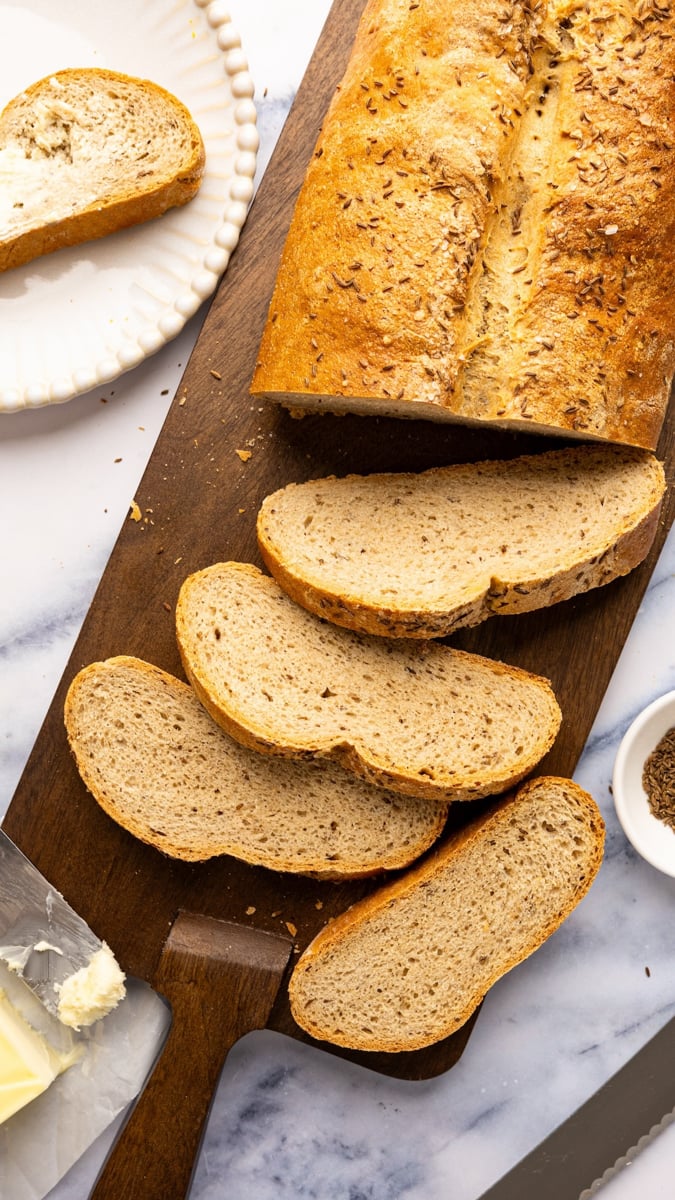
Bread flour is white wheat flour with more protein than all-purpose flour, usually about 12 to 14 percent. More protein means the dough can build more gluten, the stretchy network that traps gas from the yeast. That gives bread a taller rise, a more open crumb and more chew. It is used for loaves, rolls, pizza dough and bagels.
Why it works
When you add water to flour and knead it, two proteins join into gluten. With more protein, the strands are longer and stronger. They stretch around the gas bubbles without tearing, which you can see in the windowpane test: a well-kneaded dough made with bread flour stretches thin enough to see light through.
How to use it
The same kind of flour is sold under different names:
- Bread flour in the US and Canada.
- Strong flour or strong white bread flour in the UK, Ireland, Australia and New Zealand. Strong means high in protein, not stronger in taste.
- Vetemjöl special in Sweden, which has more protein than everyday vetemjöl.
- Manitoba flour in Italy and in some Swedish and other European shops, named after the Canadian province whose hard wheat it was first made from. It is usually at the high end of the protein range.
Check the protein on the nutrition label. Around 12 percent or more works for most bread.
Strong flour soaks up more water than all-purpose flour, so a dough made with it can take a higher hydration and still be easy to handle.
Substitutes
- All-purpose flour works in most bread recipes. The loaf will be softer and a little flatter. Use slightly less water, about 1 to 2 tablespoons less per 500 g of flour.
- Adding vital wheat gluten raises the protein of all-purpose flour. Use about 1 teaspoon per 125 g (1 cup).
How to store it
Keep it airtight in a cool, dry place and use it within about a year. Whole wheat bread flour goes rancid faster. Keep that in the freezer if you use it slowly.
Common mistakes
- Using bread flour in cakes, cookies or pastry. They come out tough and chewy.
- Following the water amount for bread flour when you use all-purpose. The dough can turn sticky and slack.
- Expecting bread flour alone to fix a dense loaf. Under-kneading and under-proofing are more often to blame.
In recipes
You will see "500 g strong white bread flour", "3 cups bread flour" and "6 dl vetemjöl special". A sourdough starter is often fed with a mix of bread flour and whole wheat or rye.
Recipes that use it
5 recipes from the sites we collect.

Related terms
- All-purpose flourAll-purpose flour is a medium-protein white wheat flour for cakes, cookies, sauces and bread. In the UK it is plain flour, in Sweden vetemjöl.
- GlutenGluten is the stretchy protein network that forms when wheat flour meets water. It gives bread its chew and structure, and too much makes cakes tough.
- KneadTo knead is to push, fold and turn dough until it is smooth and stretchy. It builds gluten so bread rises well. Here is how long it takes and how to tell.
- Windowpane testThe windowpane test checks if bread dough is kneaded enough. Stretch a small piece thin. If light shows through without a tear, the gluten is ready.
- HydrationHydration is the weight of water in a bread dough as a percent of the flour weight. Higher numbers mean a wetter dough and a more open crumb.
- Sourdough starterA sourdough starter is a fed mix of flour and water full of wild yeast and bacteria that leavens bread. Here is how to make, feed and store one.