Fritter
A fritter is a piece of food dipped in batter, or mixed into it, and deep- or shallow-fried until crisp. See the oil heat and how to avoid greasy ones.
Also called Fritters.
A fritter is food fried in a batter. There are two main kinds. In the first, pieces of food, such as apple rings or vegetables, are dipped in batter and fried. In the second, chopped food, such as corn or zucchini (courgette in the UK), is mixed into a thick batter and dropped into hot oil by the spoonful. Fritters can be sweet or savory.
How to do it
- Make a batter from flour, egg, and a liquid such as milk, beer or sparkling water. A little baking powder makes it lighter. For mixed fritters, keep it thick enough to hold its shape on a spoon.
- Dry wet ingredients well. Salt and squeeze grated zucchini or potato to remove water.
- Heat oil to 175 to 180°C (350 to 355°F). Use an oil with a high smoke point. Deep-fry in plenty of oil, or shallow-fry flat fritters in about 1 cm (⅜ inch).
- Fry a few at a time so the oil stays hot. Turn once.
- Lift them out onto a wire rack and salt savory fritters while they are hot. Sweet ones can be dusted with sugar.
How to tell it is done
The outside is crisp and golden brown. The middle is cooked through, with no wet batter when you break one open. Thick fritters usually need 2 to 4 minutes per side.
Common mistakes
- Oil that is too cool. The batter soaks up fat and turns greasy.
- Oil that is too hot. The outside burns before the middle cooks.
- Watery vegetables. They thin the batter and make soggy fritters.
- Draining on paper towels only. The bottom steams. A rack keeps them crisp.
In recipes
Many dishes are fritters under another name: Indian pakora, French beignets, Japanese tempura, Middle Eastern falafel (a batter-free cousin), and American corn fritters. A recipe that says "fritter" means a battered, fried piece of food, usually served hot. Eat them soon after frying, or reheat in a hot oven to crisp them again.
Fritter recipes
10 recipes from the sites we collect.

Zucchini and Feta Fritters
www.skinnytaste.com · 30 min

Turmeric Chickpea Fritters
minimalistbaker.com · 30 min
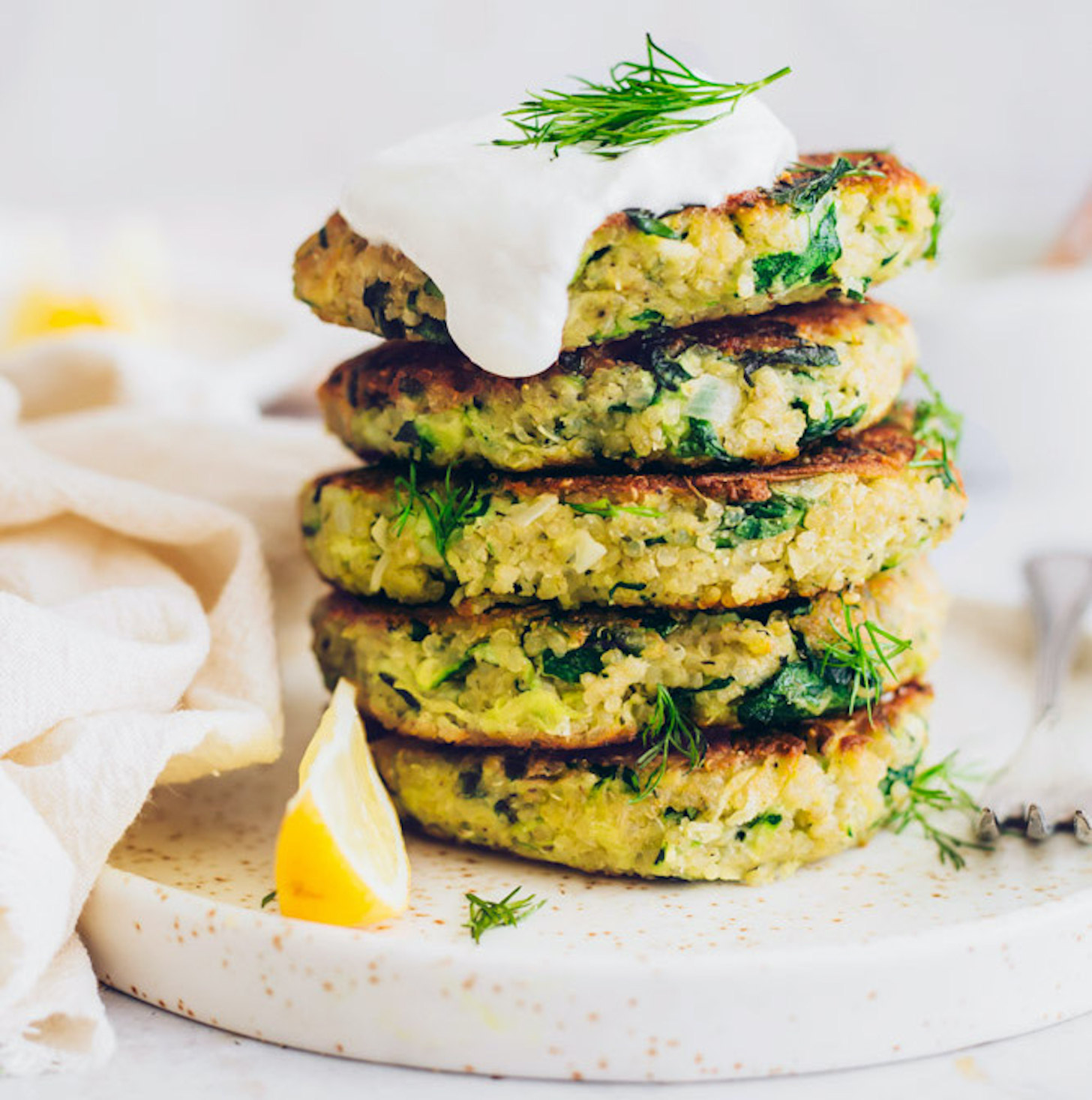
Easy Zucchini Fritters
minimalistbaker.com · 30 min
Summer Bliss Bowls with Sweet Potato Fritters and Jalapeño Ranch
pinchofyum.com · 30 min
Zucchini Fritters & Goat Cheese Sauce
pinchofyum.com · 20 min

Cauliflower Fritters
www.skinnytaste.com · 60 min

Zucchini Fritters with Feta and Dill
www.onceuponachef.com
Sopa Tarasca (Pinto Bean Soup) with Jalapeño Corn Fritters
pinchofyum.com · 40 min

Low Fat Banana Fritters
www.skinnytaste.com
Camote Tops
pinchofyum.com · 20 min
Related terms
- Deep-fryDeep-frying cooks food fully submerged in hot oil, usually 170 to 190°C (340 to 375°F), for a crisp shell and a moist inside. Here is how to do it safely.
- Shallow-fryShallow-frying cooks food in about 1 cm of hot oil in a pan, so it comes halfway up the sides. You turn it once for a crisp crust on both sides.
- TempuraTempura is Japanese seafood and vegetables dipped in a thin, ice-cold batter and deep-fried until light and crisp. See why the batter should stay lumpy.
- Smoke pointThe smoke point is the temperature at which an oil or fat starts to smoke and break down. It tells you which fats suit searing and frying.
- Wire rackA wire rack lets air reach every side of food, so cakes and bread cool without going soggy and roasted food stays crisp. Here is how to use one.
- Golden brownGolden brown is the deep, even gold color food turns as it browns in the oven or pan. It signals flavor from browning and that baked goods are cooked.