Deep-fry
Deep-frying cooks food fully submerged in hot oil, usually 170 to 190°C (340 to 375°F), for a crisp shell and a moist inside. Here is how to do it safely.
Also called Deep frying, Deep-fried.
To deep-fry is to cook food completely covered in hot oil. Because the oil surrounds every side at once, the outside dries and crisps in a few minutes while the inside steams in its own moisture. French fries, doughnuts, tempura, fried chicken and fritters are all deep-fried. Most frying happens between 170 and 190°C (340 and 375°F).
How to do it
- Use a heavy, deep pot or a fryer. Fill it no more than halfway with a neutral oil with a high smoke point, such as peanut, canola (rapeseed) or sunflower oil.
- Clip a deep-fry thermometer to the side and heat the oil over medium heat to the temperature in the recipe.
- Dry the food well. Coat it in flour, batter or breadcrumbs if the recipe calls for it.
- Lower a few pieces in gently, away from you. Do not crowd the pot; the oil temperature will drop.
- Turn the pieces as they cook. Lift them out with a spider or slotted spoon.
- Drain on a wire rack set over a tray, and salt straight away.
- Let the oil return to temperature before the next batch.
How to tell it is done
The coating is crisp and golden brown, and the bubbles around the food slow down as less water escapes. Check chicken with a thermometer: 74°C (165°F) inside.
Why it works
Oil can get much hotter than boiling water, so the surface dries and browns. The steam that rushes out of the food keeps oil from soaking in, as long as the oil stays hot enough.
Common mistakes
- Oil that is too cool. The food soaks up oil and comes out greasy.
- Oil that is too hot. The outside burns before the inside cooks.
- Wet food or water near the pot. Water makes hot oil spit and boil over.
- Leaving the pot. Never leave hot oil unattended. If oil catches fire, turn off the heat and cover the pot with a lid or damp towel. Never use water.
- Pouring used oil down the drain. Cool it, strain it and reuse it a few times, or seal it and throw it away.
Recipes that use this technique
44 recipes from the sites we collect.
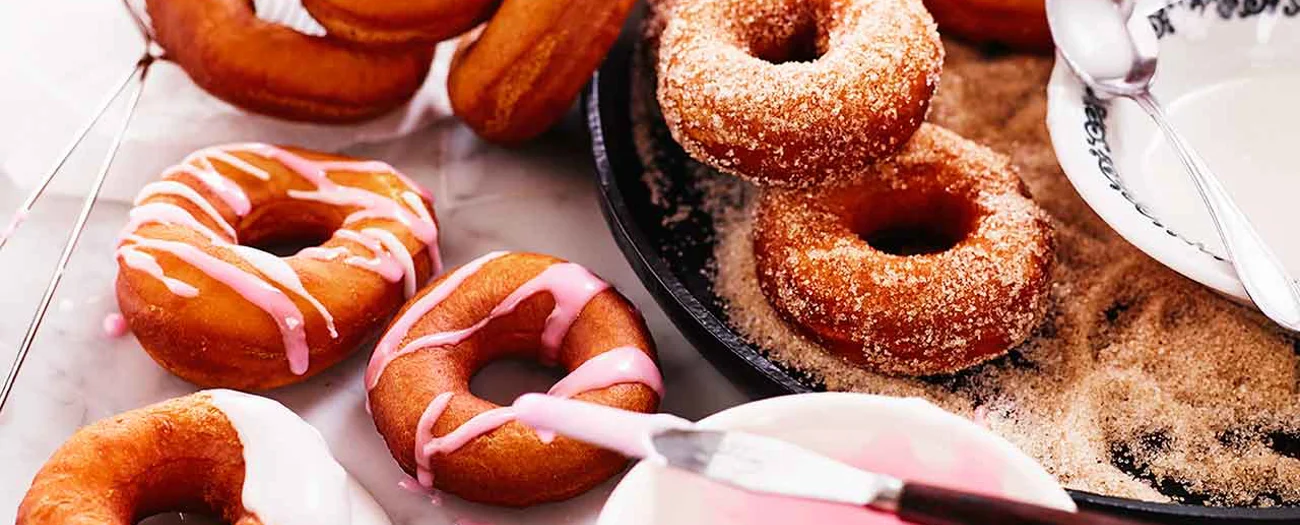
Donuts
www.arla.se · 90 min

Crab Rangoon
www.arla.se

Churros
www.arla.se · 45 min
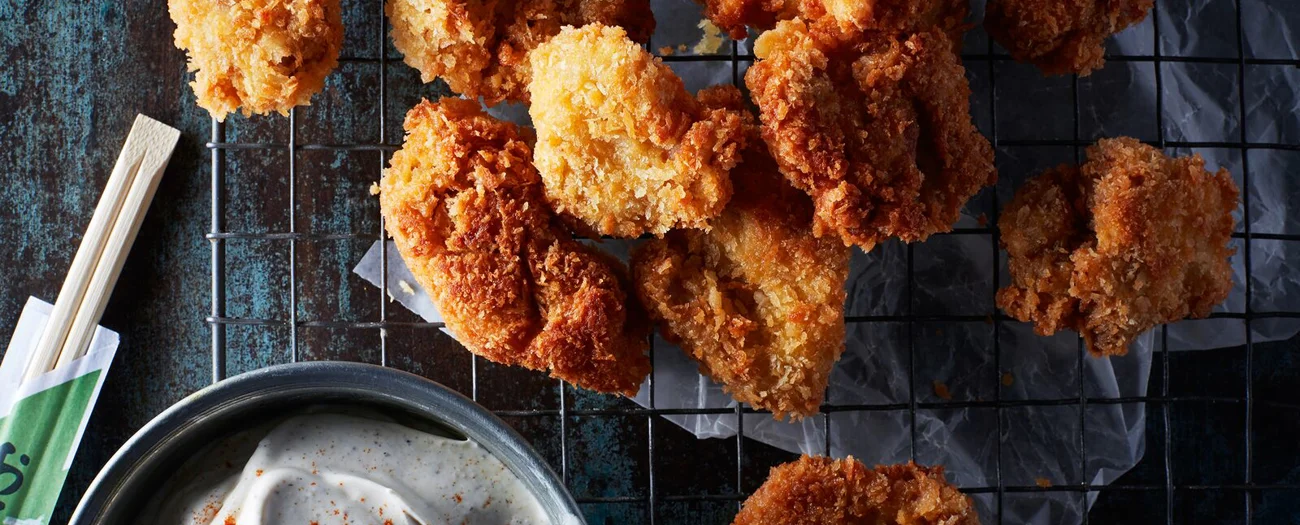
Chicken nuggets med masalakräm
www.arla.se · 90 min
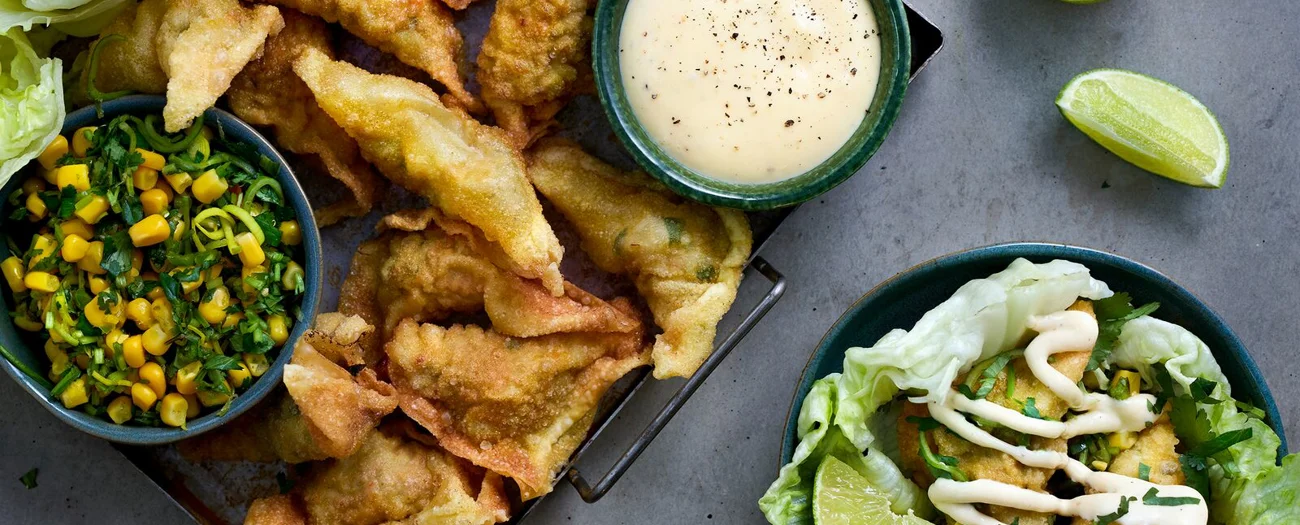
Tacodumpling
www.arla.se · 50 min
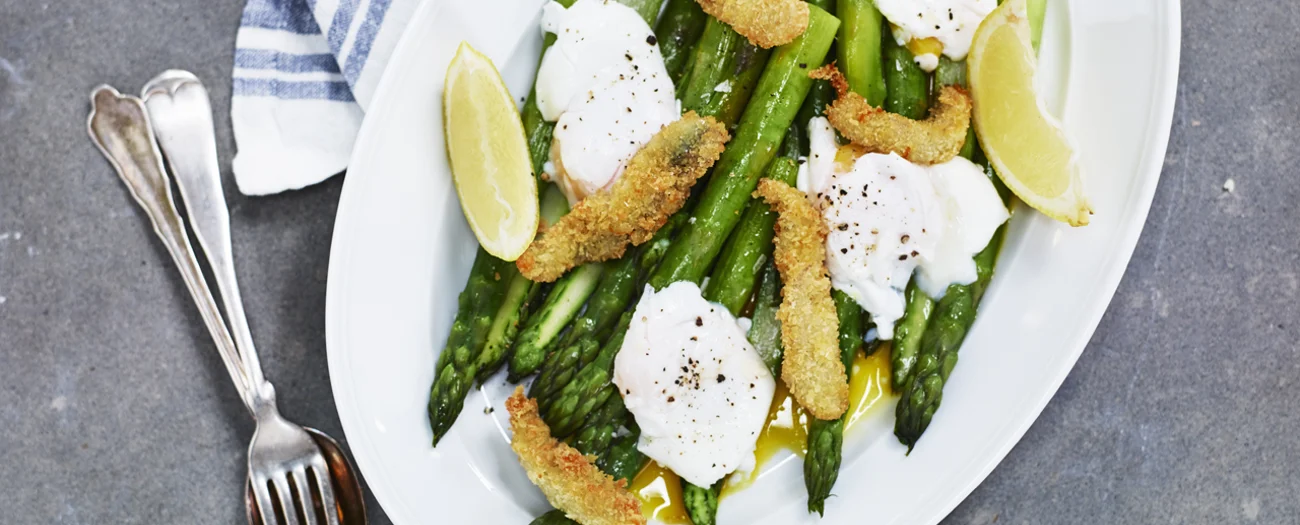
Friterad ansjovis med sparris och pocherat ägg
www.arla.se · 45 min

Chicken karaage
www.arla.se · 90 min
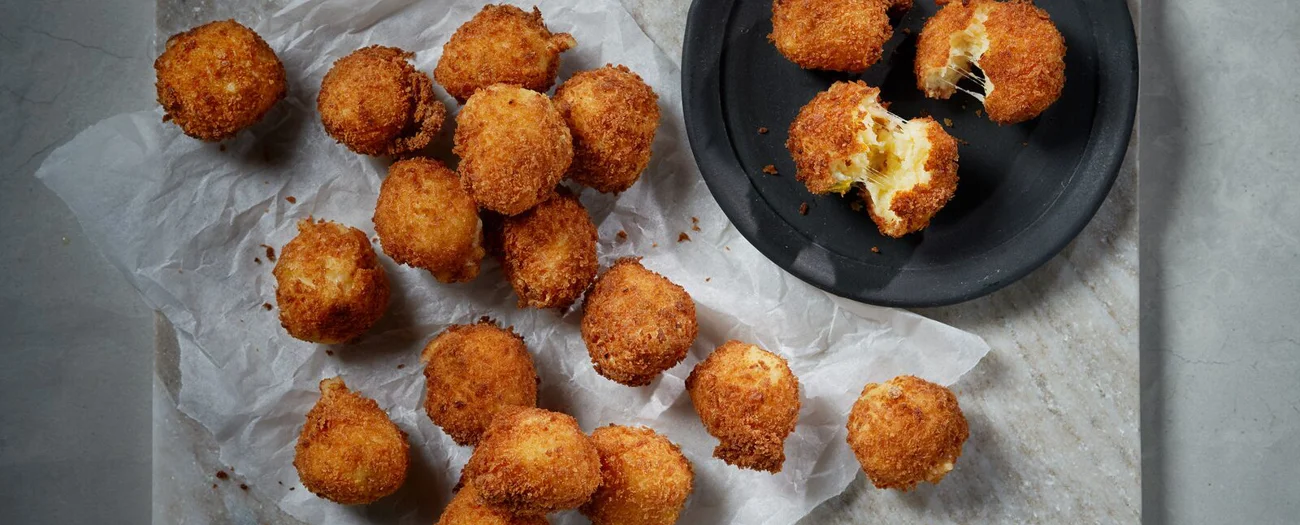
Chili cheese
www.arla.se · 80 min
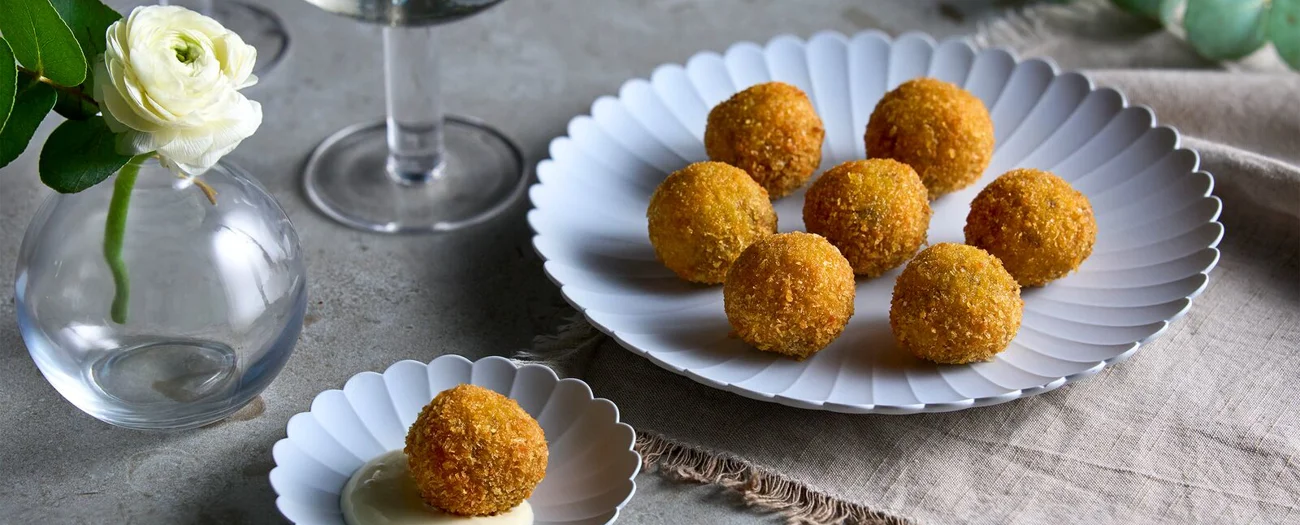
Arancini med svamp
www.arla.se · 90 min

Frityrsmet till fisk, skaldjur och kyckling
www.arla.se · 10 min
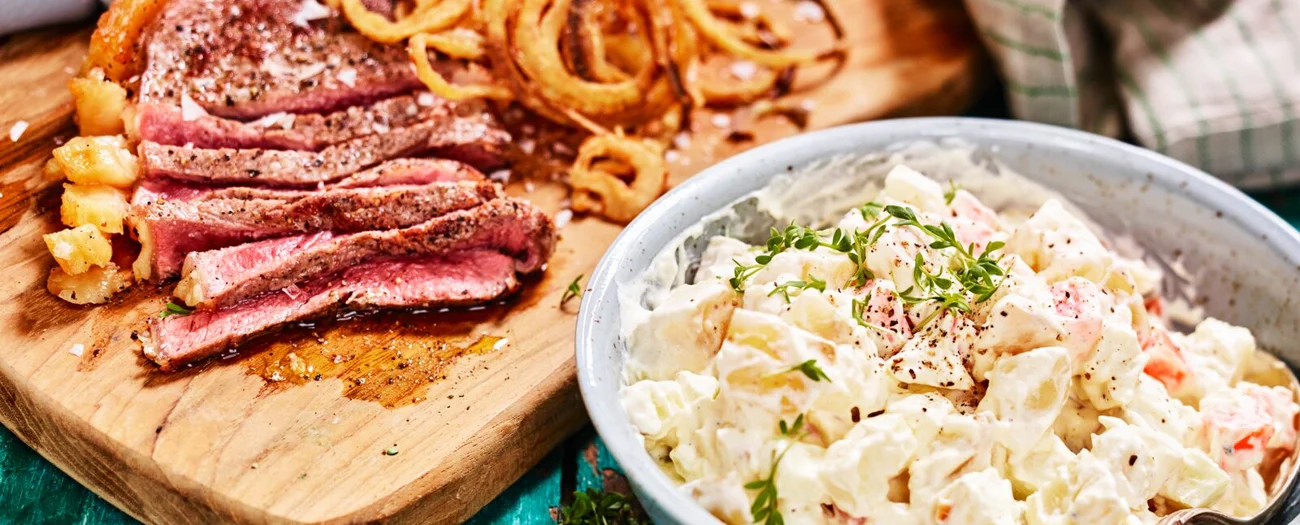
Biff med krämig potatissallad och friterad lök
www.arla.se · 45 min
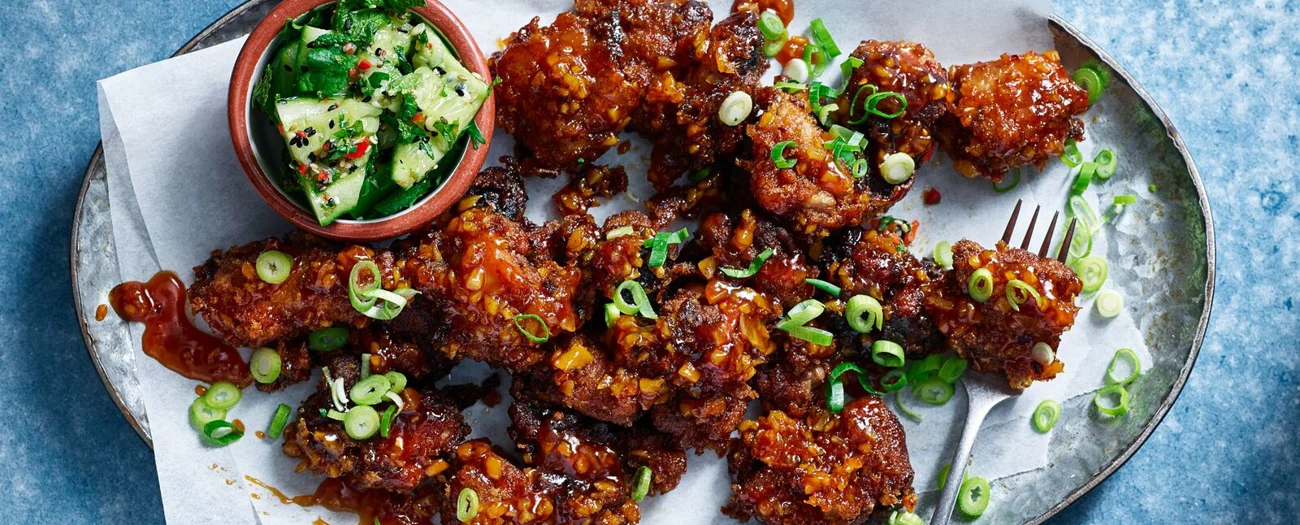
Sticky chicken
www.arla.se · 120 min
Related terms
- Smoke pointThe smoke point is the temperature at which an oil or fat starts to smoke and break down. It tells you which fats suit searing and frying.
- Shallow-fryShallow-frying cooks food in about 1 cm of hot oil in a pan, so it comes halfway up the sides. You turn it once for a crisp crust on both sides.
- SpiderA spider is a wide, shallow wire-mesh skimmer with a long handle for lifting food out of hot oil or boiling water. Here is how and when to use one.
- ThermometerA kitchen thermometer checks the heat of meat, oil, sugar and your oven, so food is safe and cooked how you want. Here is which type to use and how.
- TempuraTempura is Japanese seafood and vegetables dipped in a thin, ice-cold batter and deep-fried until light and crisp. See why the batter should stay lumpy.
- Air-fryAir-frying cooks food in a small, fan-driven oven that blows very hot air around it, giving a crisp outside with a spoonful of oil instead of a pot.