Simmer
A simmer is liquid kept just below boiling, with small, gentle bubbles rising to the surface. It cooks soups, stews and sauces without toughening them.
Also called Simmering, Simmered, Gentle simmer.
To simmer is to cook food in liquid that is hot enough to bubble gently, but not at a full boil. Small bubbles rise steadily and break the surface, and the liquid moves only a little. At sea level a simmer is roughly 85 to 96°C (185 to 205°F). Soups, stocks, stews, sauces, beans and grains are usually simmered.
How to do it
- Bring the liquid to a boil over high heat. This is faster than heating slowly.
- Turn the heat down until the big, rolling bubbles calm to small, steady ones.
- Adjust as you go. A pot that is covered, or that just had cold food added, will change speed.
- Cover, partially cover or leave uncovered as the recipe asks. Uncovered, the liquid will reduce.
- Stir now and then, scraping the bottom, so thick liquids do not catch.
How to tell it is done
You can judge the heat by the bubbles:
- Gentle or low simmer: a few small bubbles break the surface every second or two, mostly at the edges. Used for stocks, braises and delicate sauces.
- Simmer: small bubbles rise steadily across the surface. Used for soups, tomato sauce and beans.
- Brisk simmer: many small bubbles, but the surface is not churning. Used for reducing a sauce.
If large bubbles are breaking hard all over, it is a rolling boil. If the surface barely shivers, you are close to a poach.
Why it works
A simmer is hot enough to cook food through and melt the connective tissue in meat, but gentle enough that proteins do not seize and turn tough. It also keeps stocks clear, because the liquid does not churn fat and particles back into it.
Common mistakes
- Letting it boil. Meat in a stew gets dry and stringy, and stock goes cloudy.
- Judging by the dial. Every stove and pot is different. Watch the bubbles.
- A lid that turns a simmer into a boil. Check the pot a few minutes after you cover it.
- Not stirring thick sauces. They burn on the bottom even at a simmer.
In recipes
"Bring to a boil, then reduce to a simmer" is the most common instruction. "Simmer until tender" means keep it going, checking every 10 to 15 minutes.
Recipes that use this technique
771 recipes from the sites we collect.

Instant Pot Split Pea Soup with Ham
www.skinnytaste.com · 25 min

Broccoli Cheese and Potato Soup
www.skinnytaste.com · 30 min

Turkey Chili
www.onceuponachef.com · 150 min

Macaroni and Cheese Soup with Broccoli
www.skinnytaste.com · 35 min

Quinoa Pilaf with Shiitake Mushrooms, Carrots & Pecans
www.onceuponachef.com · 35 min
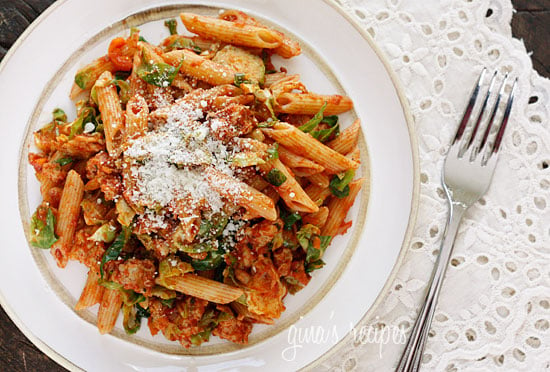
Penne Pasta with Brussels Sprouts In a Ragu
www.skinnytaste.com · 70 min

Golden Rice Pilaf
www.onceuponachef.com · 35 min

Blueberry Pancakes
www.onceuponachef.com · 30 min

Black Bean Shrimp Salad with Corn & Pickled Onions
www.onceuponachef.com · 35 min

Classic Beef Chili
www.onceuponachef.com · 180 min

Filipino Chicken Adobo
www.onceuponachef.com · 55 min

Eggplant Parmesan
www.onceuponachef.com · 100 min
Related terms
- BoilBoiling cooks food in water heated to 100°C (212°F) at sea level, where big bubbles break the surface. It is used for pasta, potatoes, eggs and grains.
- Rolling boilA rolling boil is water boiling so hard that large bubbles churn the whole surface and do not stop when you stir. It is what pasta and blanching need.
- PoachPoaching cooks food gently in liquid kept just below a simmer, around 70 to 85°C (160 to 185°F). Eggs, fish, chicken and fruit stay tender and moist.
- ReduceTo reduce is to simmer or boil a liquid uncovered so water evaporates, leaving a smaller amount that is thicker and more intense in flavor.
- Partially coverTo partially cover is to set the lid ajar on a pot so some steam escapes. It keeps a simmer steady and lets the liquid reduce slowly without boiling over.
- StewA stew is small pieces of meat or vegetables simmered slowly in enough liquid to cover them, until tender. The liquid becomes the sauce.