Steam
Steaming cooks food over, not in, boiling water, using the hot vapor that rises from it. Vegetables, fish and dumplings stay tender, moist and bright.
Also called Steaming, Steamed.
To steam is to cook food in the hot vapor that rises from boiling water. The food sits above the water in a basket or on a rack, with a lid on top to trap the steam. Steaming is gentle, keeps food moist and leaves vegetables brighter and with more flavor than boiling. It is used for green vegetables, fish, shellfish, rice, buns and dumplings.
How to do it
- Pour 2 to 5 cm (1 to 2 inches) of water into a pot or wok. It must not touch the bottom of the basket.
- Bring it to a boil over high heat.
- Arrange the food in a single layer in the steamer basket. Leave gaps so the steam can move. Line bamboo baskets with parchment or cabbage leaves for dumplings and fish.
- Set the basket over the water and cover with a tight lid.
- Steam at a steady boil. Common times: broccoli florets 4 to 6 minutes, green beans 5 to 7, fish fillets 6 to 10, potatoes in chunks 15 to 20.
- Check the water partway through long steams and top up with boiling water.
- Lift the lid away from you, so the burst of steam does not hit your face.
How to tell it is done
Vegetables are bright and crisp-tender: a knife goes in with slight resistance. Fish is opaque and flakes. Dumpling wrappers turn shiny and slightly translucent, and the filling reaches 74°C (165°F) for meat.
Why it works
Steam at 100°C (212°F) releases a lot of energy when it condenses on cooler food, so it cooks quickly. The food never sits in water, so less flavor and fewer water-soluble vitamins leach out.
Common mistakes
- Too much water. It boils up into the food and turns it soggy.
- Letting the pot boil dry. The pot scorches. Listen for the bubbling.
- A loose lid. Steam escapes and cooking slows.
- Crowding the basket. The middle pieces stay raw.
- Lifting the lid often. Every look drops the heat.
In recipes
"Steam until tender" is common for vegetables. Cooking in a sealed parcel, en papillote, is also a form of steaming.
Recipes that use this technique
69 recipes from the sites we collect.

Roasted Jalapeño Hummus
minimalistbaker.com · 30 min

Steamed Mussels with Piri Piri Sauce
www.skinnytaste.com · 26 min

Grilled Clams in Foil
www.skinnytaste.com · 15 min
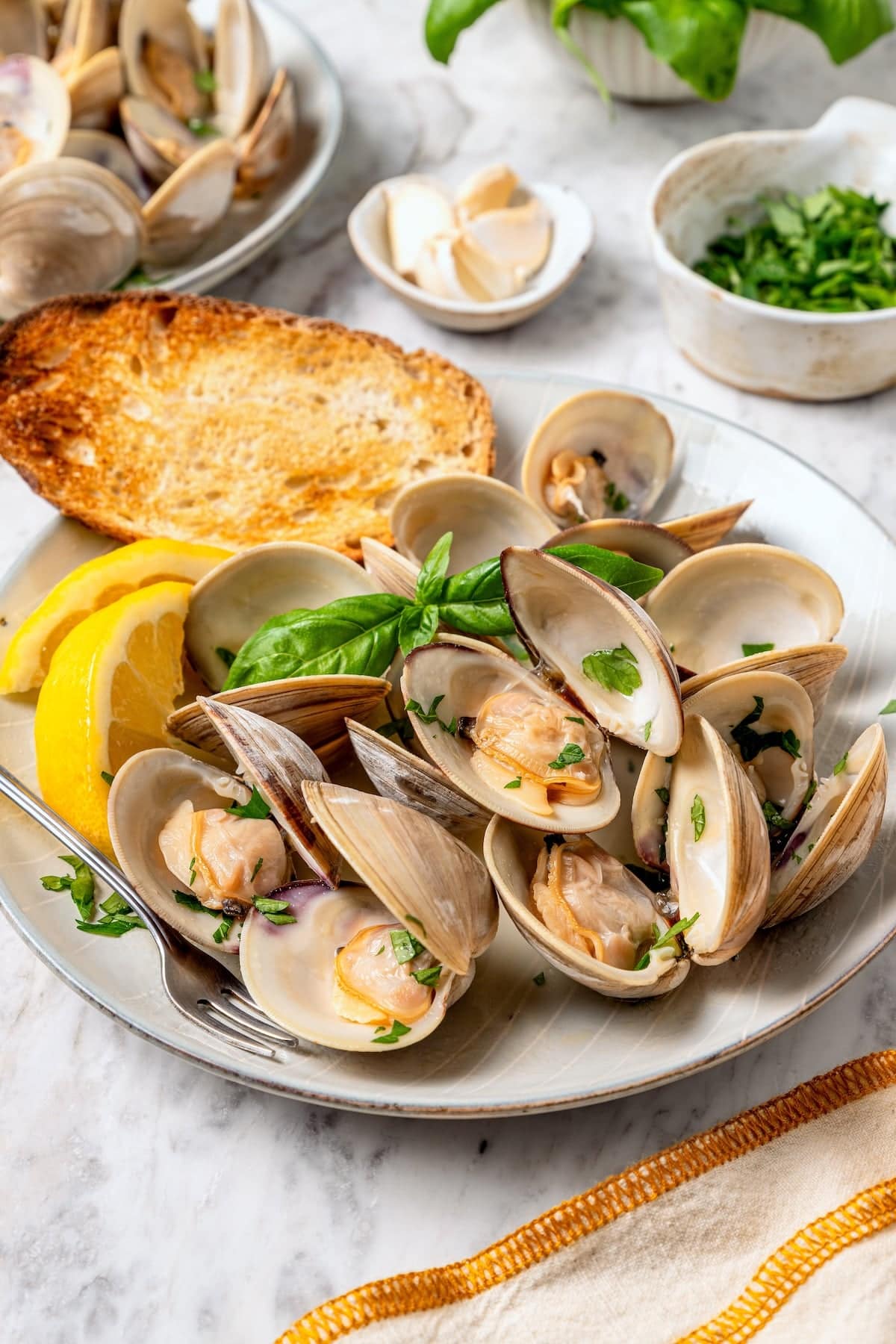
Steamed Clams
www.skinnytaste.com · 20 min

Spicy Shrimp with Cauliflower Mash and Garlic Kale
pinchofyum.com · 45 min

Steamed Asparagus with Poached Eggs
www.skinnytaste.com · 45 min

Homemade Cauliflower Gnocchi
pinchofyum.com · 30 min

Almond Butter Tofu Stir-Fry
minimalistbaker.com · 65 min

Simple Summer Corn Soup
minimalistbaker.com · 30 min

Asparagus with Dijon Vinaigrette
www.skinnytaste.com · 20 min

7-Ingredient Muesli Bread
minimalistbaker.com · 60 min

Instant Pot Pasta with Meatballs
pinchofyum.com · 10 min
Related terms
- En papilloteEn papillote means cooking food sealed in a parcel of parchment paper or foil, so it steams in its own juices. It is a gentle, quick way to cook fish.
- BoilBoiling cooks food in water heated to 100°C (212°F) at sea level, where big bubbles break the surface. It is used for pasta, potatoes, eggs and grains.
- Crisp-tenderCrisp-tender vegetables are cooked until hot and bright but still have some bite in the middle. Here are the times for common vegetables and how to test.
- DumplingA dumpling is a piece of dough, filled or plain, that is boiled, steamed or fried. See the main kinds, how to fold and cook them, and how to freeze them.
- WokA wok is a deep, round-bottomed pan from China for stir-frying, steaming and deep-frying over high heat. Here is how to season and cook in one.