Celiac disease
Celiac disease (coeliac disease in the UK) is an autoimmune condition in which gluten damages the gut. Cooking for it means no wheat, rye or barley.
Also called Coeliac disease, Celiac, Coeliac.
Celiac disease (coeliac disease in the UK) is an autoimmune condition. When someone who has it eats gluten, a protein in wheat, rye and barley, their immune system damages the lining of the small intestine. It is not a food allergy and not an intolerance. The treatment is a strict gluten-free diet for life, and only a doctor can diagnose it.
If you think you might have celiac disease, talk to a doctor before you cut out gluten. The tests usually need you to still be eating gluten to give a clear answer.
Substitutes
These grains and starches contain no gluten:
- Rice, corn (maize), cornmeal and cornstarch
- Potatoes and potato starch
- Buckwheat, millet, sorghum, teff, quinoa and amaranth
- Gluten-free flour blends, which often include a little xanthan gum to help hold baked goods together
Oats are a special case. EU and UK law lists them as a cereal containing gluten. They contain avenin, a protein similar to gluten that a minority of people with celiac disease react to. Most regular oats are also grown and milled next to wheat and pick it up. Oats labeled gluten-free are kept apart from wheat, and most people with celiac disease tolerate them. Ask your doctor or dietitian before you add them.
Common mistakes
- Forgetting the other names for wheat: spelt, khorasan, durum, semolina, farro, bulgur, couscous, freekeh and seitan.
- Using regular soy sauce, which is usually brewed with wheat. Use a soy sauce or tamari labeled gluten-free.
- Missing barley in malt vinegar, malt extract, malted drinks and most beer.
- Sharing a toaster, colander, wooden board or deep-fryer oil with gluten-containing food. Tiny amounts matter, so cross-contamination is a real risk.
- Thickening sauces with a wheat-flour roux out of habit.
In recipes
A recipe tagged gluten-free should contain no wheat, rye or barley, no ingredient made from them, and no oats unless they are labeled gluten-free. On packaged food in the EU, the UK and the US, "gluten-free" means less than 20 parts per million of gluten, a level most people with celiac disease can tolerate. Restaurant food is not always held to the same standard, so ask how the dish is made. A dietitian can help you learn to read labels and plan meals.
Recipes free from it
1949 recipes from the sites we collect.
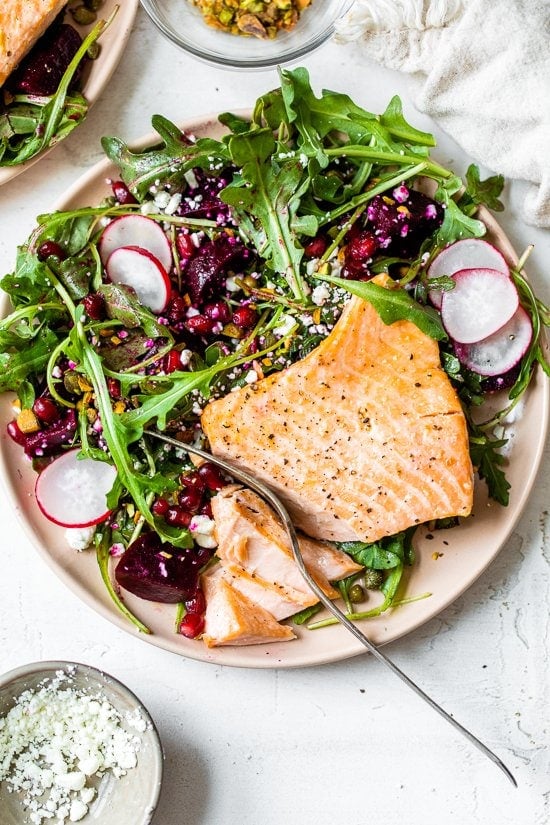
Salmon, Beet, and Arugula Salad with Pistachios and Pomegranates
www.skinnytaste.com · 30 min

Asparagus Egg and Bacon Salad with Dijon Vinaigrette
www.skinnytaste.com · 20 min

Mediterranean Fish en Papillote
www.skinnytaste.com · 45 min

Avocado Quinoa Salad
www.skinnytaste.com · 25 min

Green Curry Noodles
www.skinnytaste.com · 40 min

Salmon Caesar Salad
www.skinnytaste.com · 30 min

Pineapple Chicken Stir Fry
www.skinnytaste.com · 20 min

Poached Pears with Yogurt
www.skinnytaste.com · 35 min

Sprinkle Dipped Meringues
www.skinnytaste.com · 180 min

Buttermilk-Marinated Air Fryer Whole Roasted Chicken
www.skinnytaste.com · 1495 min

Air Fryer Baked Sweet Potato
www.skinnytaste.com · 46 min

Blackened Grilled Salmon Skewers
www.skinnytaste.com · 90 min
Related terms
- Gluten-freeGluten-free on a label means under 20 parts per million of gluten in the EU, UK and US. Here is what that covers and how to cook gluten-free at home.
- GlutenGluten is the stretchy protein network that forms when wheat flour meets water. It gives bread its chew and structure, and too much makes cakes tough.
- Cereals containing glutenCereals containing gluten is the EU allergen group for wheat, rye, barley and oats, including spelt and khorasan. Labels must name the grain.
- Wheat allergyA wheat allergy is an immune reaction to proteins in wheat. It is not celiac disease, and some foods labeled gluten-free can still contain wheat.
- Cross-contaminationCross-contamination is when germs or allergens spread from one food, surface or hand to another. Separate raw meat, and wash hands, boards and knives.